
Blog

Explore articles and insights on navigating life transitions, ADHD, and personal growth

Achieving Your Goals: Embracing the Power of Reflection

Achieving Your Goals: The Role of Reflection

As a Coach, I always encourage clients to pause and reflect on their progress. Whether you’re at the start of a new month or simply taking a moment to check in with yourself, reflection can be a powerful tool for staying on track with your goals.

Often, we begin new challenges with enthusiasm and motivation, but as time goes on, the demands of daily life can make it easy to lose focus. Taking a step back allows you to acknowledge how far you’ve come, realign your focus, and set yourself up for the weeks ahead. Celebrating even the smallest achievements can be a great way to boost your confidence and inspire you to keep moving forward.

If your reflection leaves you feeling like there’s more you could have done, let that be a source of motivation rather than frustration. Instead of dwelling on what hasn’t gone to plan, consider what you can adjust going forward. Were there any specific obstacles that stood in your way? Identifying them can help you create a clearer plan and make the next steps more achievable.

Celebrate the Wins – Big and Small

Take a minute to look back at the previous month, and reflect on what you’ve achieved. Did you stick to a new habit, take the first steps toward achieving your goals, or handle a challenging situation better than you might have before? Even small wins deserve recognition, as they are the building blocks of bigger successes.

To celebrate your progress and stay motivated in achieving your goals, try writing down your achievements in a journal, sharing them with a trusted friend, or treating yourself to something meaningful, a quiet moment of self-care, or even a small reward like a favourite book or meal. Acknowledging these moments boosts your self-esteem and reinforces the positive changes you’re making.

Understanding Self-Concept in Reflection

Reflection isn’t just about evaluating actions; it’s also an opportunity to connect with your self-concept, the way you perceive and define yourself.  Self-concept is made up of three components:

  1. Self-Image: How you see yourself, including physical attributes, personality traits, and roles in life.
  2. Self-Esteem: How much you value yourself and your abilities.
  3. Ideal Self: The person you aspire to be.

By reflecting on these aspects of self-concept, you can gain clarity on how your actions and habits align with the person you want to become. For example, does the way you’ve spent January reflect the goals and values of your ideal self? This awareness can help you make intentional changes to strengthen your self-concept and move closer to your aspirations.

What Have You Learned?

Reflection is also a chance to embrace the lessons of the past few weeks. Ask yourself:

  • What worked well for me this month?
  • What challenges did I face, and how did I respond?
  • Is there anything I’d like to approach differently moving forward?

These questions aren’t about criticism, they’re about curiosity. For example, you might realise that setting aside 10 minutes daily for mindfulness helped you feel more focused and calmer. Or perhaps you noticed that skipping your usual planning time on Sunday evenings made your week more chaotic. Understanding the patterns and choices that shaped January, you can step into February with greater clarity and intention.

Reconnect with Achieving Your Goals

The start of the year is often a time for big resolutions and goals. But now is a good time to check in with yourself:

  • Are your goals still aligned with what matters most to you?
  • Do you need to adjust your expectations or timeline?

Sometimes, we set goals that feel inspiring now but don’t reflect the reality of our lives. That’s okay. Giving yourself permission to adjust or refine your goals is a sign of growth, not failure.

A woman at her desk writing down her goals

Preparing for the Months Ahead

As you continue throughout the year, think about how you want to carry the momentum forward. Consider these steps to stay focused:

  1. Set Micro Goals: Break larger goals into smaller, more manageable steps. Progress is easier to achieve and sustain when it feels within reach.
  2. Revisit Your Priorities: Make sure your daily actions align with what’s most important to you.
  3. Celebrate Progress Along the Way: Build in moments to reflect on and reward your efforts, it keeps you motivated and encouraged.

A Fresh Start Every Month

The beauty of a year is that it offers 12 opportunities to reset and refocus. Whether January unfolded precisely as you’d hoped or brought unexpected challenges, each day, week, and month is a chance to start fresh.

Reflection allows you to move forward with purpose, confidence, and a sense of ownership over your journey, building on the progress you’ve already made or embracing the lessons learned.

Plan Your Next Steps Using Visualisation and Affirmations

As you reflect on the past month, take a moment to look ahead. Visualisation is a highly effective tool for finding focus and igniting motivation. Picture where you’d like to be in the next couple of months. What does your life look like? What habits have you embraced? How do you feel about your progress?

Pair this visualisation with affirmations to strengthen your mindset. For instance, you might say to yourself, “I am capable of achieving my goals,” or “I am becoming the best version of myself, step by step.” These positive reinforcements help align you with your intentions and remind you of your ability to create meaningful change.

I love myself as I am quote handwritten in blue and green

Take a Moment to Reflect

Before you dive into the month ahead, take a few minutes to reflect on where you’ve been, what you’ve learned, and how you want to grow. Progress isn’t about perfection; it’s about showing up for yourself, one step at a time.

You’ve already started the journey, wherever you’re heading, and that’s something to celebrate. If you get stuck when working on your personal short-term or long-term goals, you can reach out for support.


Wine O’Clock to Wellness: Making Sense of Drinking Habits

Wine O’clock to Wellness: Making Sense of Drinking Habits

For many people, drinking alcohol begins as a way to unwind, socialise, or manage stress at the end of the day. Over time, it can become a habit that feels harder to change than expected, even when you start to question whether it still fits the life you want.

These moments of reflection often come during times of change, when we begin to notice which habits are supporting us and which may no longer feel helpful.

How Drinking Became Normalised for Women

Drinking alcohol, especially wine and gin, has become increasingly normalised and even encouraged as a way for women to unwind. Popular phrases such as “wine o’clock” and “live, laugh, love and drink wine” have become part of everyday language, often framing drinking as a reward at the end of the day. While these messages can seem light-hearted, they can also make it easier to overlook the impact alcohol may be having on our mood, energy, and overall wellbeing.

For some people, reading or hearing these messages can prompt a moment of reflection. It may raise questions about personal habits, routines, and whether alcohol still plays the same role it once did. These reflections look different for everyone and there is no single right way to respond to them.

Reflecting on Your Drinking Habits

When it comes to drinking habits, everyone’s relationship with alcohol is different. For some, alcohol is part of everyday life, while for others it appears mainly in social situations or during periods of stress. Taking a moment to reflect on your own habits can sometimes bring clarity about what role alcohol plays for you.

People often drink for different reasons. For example:

  • Social drinking, where alcohol is linked with connection, socialising, or fitting in

  • Coping drinking, where alcohol is used to manage stress, worry, or emotional discomfort

  • Enhancement drinking, where alcohol is used to lift mood or add excitement

  • Conformity drinking, where alcohol feels tied to expectations or avoiding feeling left out

These descriptions are not labels, and many people recognise parts of themselves in more than one. The purpose of reflecting in this way is simply to build awareness and understanding, rather than to judge or categorise yourself.

Does It Help to Understand Your Drinking Habits?

Taking time to reflect on your drinking habits can sometimes help you notice patterns or triggers you may not have been aware of before. For some people, this brings reassurance. For others, it simply offers a clearer picture of how alcohol fits into their day-to-day life.

Rather than focusing on labels or categories, it can be more helpful to gently ask yourself how alcohol affects different areas of your life. This might include your mood, energy levels, relationships, or how you feel about yourself over time.

There is no right or wrong conclusion to reach. For many people, the value lies in the reflection itself and in becoming more aware of what feels supportive and what feels less so.

Why Do We Begin to Rely on Alcohol?

Alcohol can sometimes become part of daily life in ways we do not immediately notice. For many people, it starts as something that feels helpful, familiar, or comforting, especially during busy or demanding periods.

People often describe different reasons why alcohol becomes part of their routine. For example:

  • A way to relax, such as having a drink after work or once the house is quiet, which can begin to feel like an end-of-day ritual.

  • Coping with stress, where alcohol offers temporary relief from pressure, worry, or emotional load.

  • Easing boredom, particularly in the evenings, when drinking can make time feel fuller or more engaging.

  • Numbing difficult feelings, where alcohol acts as a distraction from uncomfortable thoughts or emotions.

  • A social habit, where gatherings or nights out feel centred around drinking, or alcohol helps people feel more at ease socially.

During times of change, such as starting a new job, moving house, or navigating a relationship shift, it can be especially easy for alcohol to take on a larger role. Noticing these patterns is not about blame or judgement, but about understanding what alcohol may be offering at different points in life.

Thinking About Safety and Support

If you are considering making changes to your drinking, it is important to think about your wellbeing and safety. For some people, alcohol has become a significant part of daily life, and sudden changes can feel physically or emotionally challenging.

If you have concerns about your health, or if drinking feels difficult to manage on your own, speaking with a GP or a specialist support service can be a helpful first step. Reaching out for guidance is a sign of self-care, not failure.

For many people, the starting point is not stopping immediately, but becoming more aware of their habits, triggers, and needs. Small, supported steps often feel more sustainable than drastic change.

woman looking sad sitting at a table contemplating drinking wine

The Link between Alcohol and Wellbeing

While alcohol may offer short-term relief, its longer-term effects can quietly affect different areas of well-being over time. Some people begin to notice changes that feel out of step with how they want to live or feel.

Common areas that can be affected include:

  • Physical health: Alcohol can place strain on the body over time, including the liver and heart, and may contribute to longer-term health concerns.

  • Emotional well-being: Drinking can sometimes intensify feelings of anxiety, low mood, or emotional flatness, particularly when used as a way to cope with stress.

  • Relationships: Alcohol can influence communication, patience, and connection, which may affect close relationships in subtle or more noticeable ways.

Periods of change often invite reflection. For many people, noticing how alcohol fits into their overall well-being becomes part of a wider process of reassessing what feels supportive and what no longer does. This awareness alone can be an important step in understanding personal needs and values as life evolves.

A Kinder Way Forward

For many people, change begins quietly. Not with a big decision, but with moments of noticing. Noticing how you feel in the mornings. Noticing what you reach for at the end of the day. Noticing what helps and what no longer feels supportive.

Reflecting on your relationship with alcohol can open space for greater clarity. Some people notice a growing desire for clearer mornings, more emotional steadiness, or a stronger sense of alignment with their values. Others simply begin to question habits that once felt automatic.

There is no single right outcome and no pressure to change everything at once. What matters is developing awareness and self-compassion as you explore what feels right for you at this stage of life.

For some, this reflection leads to gradual changes. For others, it offers insight, reassurance, or a clearer understanding of personal needs. All of these are valid starting points.

Supportive Strategies to Explore

If you’re trying to stop drinking alcohol or cut back, incorporating self-help techniques into your daily routine can make a significant difference. Here are some practical methods to support your efforts:

  1. Identify Your Triggers

Reflect on when and why you feel the urge to drink. Common triggers include stress, boredom, social pressure, or emotional distress. Once you know your triggers, you can prepare alternative coping strategies, such as journalling, walking, or practising deep breathing.

  1. Set Clear Goals

Decide whether you want to cut down or stop drinking completely. Set specific, achievable goals, like limiting yourself to a certain number of drinks per week or avoiding alcohol during weekdays. As you move forward tracking your progress can help you stay accountable and motivated.

  1. Replace the Habit

Find healthier alternatives to fill the time or emotional space that drinking occupies. This might include exercise, meditation, listening to pod-casts, reading, cooking, or taking up a new hobby. Substituting alcohol with non-alcoholic drinks, like sparkling water or herbal teas, can also help ease the transition.

  1. Create a Support System

Share your challenges and intentions with a trusted friend or family member who can support you. You may also find it helpful to join online communities or local support groups where others are on the same journey. Knowing you’re not alone can be incredibly encouraging.

  1. Practice Mindfulness

Mindfulness can help you stay in the present and become aware of your thoughts and emotions. When the urge to drink arises, take a moment to pause, take a deep breath, and ask yourself what you’re feeling. This awareness can help you choose a healthier response.

  1. Celebrate Your Wins

Acknowledge your progress, even if it seems small. Whether declining a drink at a party or going a week without alcohol, celebrating these victories builds confidence and reinforces your commitment to change.

woman's hand round a cup drinking a healthy herbal tea

Are You Ready to Take the Next Step?

Reducing or stopping drinking isn’t just about what you give up, it’s also about what you gain. Many people notice greater clarity, steadier energy, and an increased sense of confidence as they begin to change their relationship with alcohol.

If you’re starting to reflect more on your habits, it can help to focus on small, supportive changes rather than trying to overhaul everything at once. The goal isn’t perfection, it’s progress, and finding a way forward that feels healthier, calmer, and more aligned with the life you want.

Top 5 Tips for Setting Goals and Achieving Them

Top 5 Tips for Setting Goals and Achieving Them

Research consistently shows that setting clear, structured goals increases your likelihood of success. When goals are broken down into manageable steps, progress becomes easier to track and maintain. Having a clear action plan provides direction, focus, and motivation, helping you stay on course even when challenges arise.

Goal setting isn’t just about achievement, it’s about taking ownership of your life and making meaningful progress. It’s easy to get distracted by daily demands, but setting personal goals, not just career or academic ones, can be equally important. Achieving a goal doesn’t just move you forward; it also boosts confidence, enhances self-esteem, and supports overall well-being.

No matter your age or stage of life, it’s never too late to start setting goals. Whether you’re focusing on personal growth, improving health, or making lifestyle changes, goal-setting frameworks like SMART goals can help you stay motivated and focused.

1. Setting the Foundation: Writing and Defining Your Goals

Writing down your long-term goals is the first step towards turning aspirations into reality. Reflect on what is truly important to you and where you envisage yourself in the future. It could be in one month or year, whatever works for you. Gaining a clear vision of your goal is an important part of the goal-setting process.

If you only have vague goals, a good strategy is to get creative, design a vision board, and find photos and quotes that grab your attention.  Visualising a specific goal can bring it to life and give you a clear vision of where you want to be in the future. Also, getting creative is fun and has many mental health benefits.

Remember, a goal doesn’t have to be something extreme, such as running a marathon or skydiving (although it can be if that’s what you want). Your personal goals can be anything that’s important to you, whether health or professional, or you want to focus on personal development goals.

Setting one goal can positively impact other areas of your life.  For instance, a personal development goal could be to boost your confidence and self-esteem. Increasing your confidence and self-esteem can open doors to new experiences, and you will learn to trust your decisions more. Personal development goals can be the best way to set the foundations for practical goal setting.  As you set new goals, discover how the role of reflection can support your progress in my blog.

2. Milestone Setting: Tracking Achievements

Once you have your big goal, the next step is to break it down into smaller goals and then break these smaller goals down into more manageable tasks.  A big goal can feel overwhelming if you imagine yourself standing at the bottom of a vast mountain; the top can seem so far off, and reaching the top can feel unachievable. However, climbing that mountain can feel doable when you break it down into manageable tasks.

A good idea is to set aside time to note down everything you need to do to complete a task. Putting pen to paper can give you a clearer understanding of what you must do to achieve that task and increase your chances of success.  It can often be the smaller tasks that are the most important steps, so getting these onto paper can be highly beneficial.

Keeping a to-do list can be an excellent way to keep you on track; you can then update it daily, marking off your achievements.  Your achievements are your driver to move forward, so it’s so important to celebrate them. When completing tasks, it can be helpful to identify any barriers you may come across and then do some problem-solving to decide how to overcome them. Balancing this with self-care is essential, as working towards your goals can be hard work. Reminding yourself of ‘why’ you want to reach your goal is another factor that will help drive you towards the finishing line.

man jumping through gap in cliffs signifying reaching your goals

3. Make Goal-Setting Achievable

I advocate for thinking big and not letting anything stand in your way, but it is also essential to set realistic goals. It’s about getting the balance right, as there are some things you need to consider when setting goals. For example, suppose the big goal is to climb Kilimanjaro. In that case, there is a lot to consider, such as physical fitness, mental well-being, the possibility of altitude sickness, booking vaccines, and available finances.

The next step towards positive goal setting is devising an action plan. To do this, write down the different factors you need to consider. Then, note the actionable steps it will take to complete each factor. You could work on them individually, or you might work on some simultaneously.

Pushing yourself out of your comfort zone when setting goals is positive, as ambitious goals are great for personal growth. However, you also want to avoid getting overwhelmed. So, think big, but also consider your capabilities and the available resources before setting goals, tasks, and time scales.

4. Set Timeframes: Assign Deadlines to Create a Sense of Urgency

Time scales and deadlines are essential to goal setting as they keep you on track, make you accountable, and can prevent procrastination and perfectionism.  You can gauge your progress by setting target dates for each task, including the small goals. There can be room for movement with this; it can be challenging to know how long a particular task will take, as it can depend on your current situation, such as external factors.

However, having an estimated timescale can keep you motivated as you know that each minute you work on the task brings you closer to reaching the end goal. For greater goal-setting success, you must clearly understand what you must do to achieve the big goal. You can then break this down into daily tasks.

man with arms outstretched enjoying freedom representing reaching goals

5. Seek Accountability and Be Resourceful

Keeping yourself accountable is another crucial part of goal setting. It can be easy to get off track, as other exciting things might appear while you work on a task. If this happens, note down whatever distracted you and spend time on it when you have a planned timeout. Some great online accountability trackers can help with motivation and organisation and keep you accountable.

Sharing your goal with a family member or trusted friend can help keep you accountable. However, if you prefer not to share your goal-setting journey with others, try writing about it in your journal or checking if there are local groups or an online community of people with similar goals. Professional help is also available if you would like a counsellor or coach to help you on your goal-setting journey. You can check out my services page for more information.

Checking your progress regularly is a great way to ensure you’re on the right track. It’s important to remember to celebrate your achievements, even if you feel they’re small steps. After all, small steps can lead to big changes. Having a list of tasks can feel daunting, so take time to look back at what you have achieved with pride.

SMART Goals

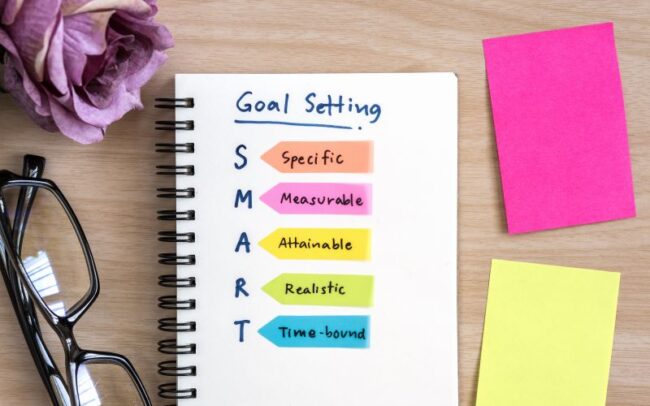
SMART goals are a structured approach to goal setting often used by professional coaches. It is also a technique you can implement if you are self-coaching.  The SMART Goal acronym is Specific, Measurable, Achievable, Relevant and Time-bound.  Let’s break down SMART Goals and what they mean.

  • Specific: Set the goal that you want to accomplish
  • Measurable: Plan how you are going to track your success
  • Achievable: Check your goal is realistic
  • Relevant: Ensure there are beneficial outcomes
  • Time-bound: Create a deadline and prioritise tasks

Following the SMART goal criteria will ensure you clearly understand your goals and confirm they are within reach.

note book with handwritten smart goals open on a table with glasses and sticky notes.

Empowering Yourself Through Self-Coaching

If you are self-coaching rather than working with a professional coach, a great tip is to follow the SMART goals model to keep on track. Reaching your goals can be a transformative journey that can foster growth and resilience.

When you achieve your goals, you prove to yourself that anything is possible when you fully invest in the process. Reaching your goals highlights the power we hold within ourselves.

What to Take into Consideration When Self-Coaching:

  • Understanding Motivation: Intrinsic vs. Extrinsic Motivation

What drives you to achieve your goals? Are you motivated by internal satisfaction (intrinsic motivation) or external rewards (extrinsic motivation)? Understanding what fuels your ambitions can help you tailor your approach and stay committed to long-term success.

  • Overcoming Obstacles: Handling Setbacks and Failures

Resilience is key to goal setting. Challenges, setbacks, or feelings of failure are part of the process. Having strategies in place to navigate obstacles can help you stay focused and continue moving forward, even when progress feels slow.

  • The Importance of Mindset: How a Growth Mindset Supports Goal Achievement

A growth mindset is essential for success. If you believe you can’t reach your goals, you’re far less likely to achieve them. Self-belief and self-esteem play a crucial role in progress—working on these areas can make goal-setting more effective and fulfilling.

  • The Role of Reflection: Reviewing and Revising Goals

Your goals may evolve over time, and that’s okay. Regularly reviewing and adjusting your goals ensures they remain relevant to your life and aspirations. Life changes, new interests, or shifting priorities can impact your objectives, so checking in with yourself can keep you on the right track.

  • The Power of Visualisation and Affirmations

A clear mental image of your goal can reinforce your motivation and help you stay committed. Visualisation makes your goal feel real, helping you take inspired action, while affirmations strengthen positive beliefs and self-confidence.

  • The Impact of Environment: Creating a Space for Success

Your surroundings influence your mindset and productivity. Having a dedicated space for planning or working toward your goals can improve focus. Similarly, surrounding yourself with supportive people or communities can provide encouragement and accountability.

  • Health and Wellbeing: The Foundation for Goal Achievement

There’s a strong connection between physical health, mental wellbeing, and goal success. Eating a nutritious diet, exercising regularly, and prioritising sleep can improve focus, energy levels, and resilience—making it easier to stay on track.

  • Leveraging Technology: Tools and Apps for Goal Tracking

Tracking progress keeps you motivated. Whether you prefer a journal or digital goal-tracking apps, these tools can boost accountability and help you celebrate milestones along the way.

  • Goal Setting for Different Life Stages

Goals naturally shift as you move through different life stages. What mattered in your student years may differ from your priorities as a parent or professional. Reassessing your goals ensures they align with your current circumstances and aspirations.

  • The Role of Emotional Intelligence in Goal Setting

Emotional awareness and self-regulation play a key role in goal achievement. Stress, motivation, and relationships can all impact your journey. Having tools to manage emotions effectively can help you stay resilient and focused.

Counselling and Coaching Approach

Counselling and coaching can work together to help you identify what truly matters to you and create goals that reflect your values and interests. Exploring your needs and preferences often brings clarity about what gives your life meaning, whether that’s creativity, connection, adventure, or balance.

Through this process, you can experiment with new ideas, develop self-awareness, and discover activities that bring a renewed sense of purpose. Using self-coaching tools alongside professional guidance helps strengthen confidence and motivation, allowing you to make steady progress toward your goals.

Ultimately, combining self-reflection with structured support can lead to lasting satisfaction and a greater sense of accomplishment, not just from reaching goals, but from recognising how far you’ve come.

If you prefer to explore these ideas at your own pace, I also offer a small collection of self-guided courses and recordings that support reflection, emotional awareness, and practical goal-setting.

To Conclude

Applying the above tips empowers you to take charge of your goal-setting journey as your coach or mentor.   Self-coaching can be highly beneficial. However, it’s also okay to reach out to a trusted friend or for professional help if you feel you would like that extra bit of support.

Schedule Your Free Discovery Call

Counselling, ADHD coaching, and self-paced ADHD courses to help you feel calmer, clearer, and more confident. Book a free 20-minute Zoom discovery call anywhere in the UK.

SCHEDULE A Free DISCOVERY CALL