
Blog

Explore articles and insights on navigating life transitions, ADHD, and personal growth

Love and Neurodivergence: Understanding Relationships Through a Different Lens

Love and Neurodivergence: How ADHD, Anxiety, and Neurodivergent Traits Shape Connection

Love is something we all seek, but how we experience it can be deeply shaped by how our brains are wired. And love isn’t just about romance, it’s in our friendships, our families, the way we connect with others, and, most importantly, the way we love ourselves.

It can be helpful to pause and reflect on how we give and receive love, especially for those of us who think and feel differently.

For people who are neurodivergent, love can feel intense, overwhelming, exhilarating, or even uncertain. ADHD, anxiety, and other neurodivergent traits bring unique challenges and strengths when it comes to connection. So, what does love really feel like when your brain works differently?

Love Through a Neurodivergent Lens

Neurodivergent brains often experience emotions in a heightened way. Love isn’t just a feeling, it can be a full-body experience, a hyperfocus, or even a source of deep anxiety. Some common experiences include:

  • Deep Emotional Intensity – Many people who are neurodivergent feel love in extremes. It’s all or nothing. The highs can feel euphoric, but the lows, like miscommunication or perceived rejection, can feel unbearable.
  • Rejection Sensitivity Dysphoria (RSD) – A delayed text, a change in tone, or an unexpected shift in plans can trigger a deep fear of being unwanted or unworthy. This can make relationships feel fragile, even when they’re not.
  • Hyperfocus on Love – When you have ADHD, falling in love can feel all-consuming. Your brain locks onto the person, replaying conversations, analysing every interaction, and wanting to be around them all the time. Heard of love-bombing? It can feel like that to that recipient at times. It’s not just excitement, it can feel like a deep, urgent focus that’s hard to shift.
  • Difficulty regulating emotions – For many people who are neurodivergent, emotions don’t come in small doses. A minor disagreement can feel overwhelming, and it can be hard to pause before reacting. This can lead to impulsive words or actions in the heat of the moment, or the opposite, shutting down completely to avoid feeling too much at once.

These experiences can be overwhelming, but they also come with unique strengths.

People who are Neurodivergent  often love deeply, passionately, and with a level of authenticity that can be incredibly rare.  If you often find yourself caught in patterns of overthinking or struggling with self-doubt in relationships, small mindset shifts can help. Building self-confidence and breaking negative patterns can make a huge difference in how you experience love and connection.

Love Beyond Romance: Navigating Family and Friendships

Relationships with family and friends can be just as complex as romantic ones, often requiring deep understanding and patience on both sides. For people who are neurodivergent, love and connection might not always fit into traditional expectations. Communication differences, emotional intensity, and sensitivity to rejection can all influence how these relationships unfold.

Rejection sensitivity dysphoria (RSD) can sometimes lead to misinterpreting silence or changes in behaviour as personal rejection, when in fact they may not be. Understanding how these patterns develop can help create healthier, more secure connections.

If you’ve ever felt that friendships or family relationships are harder than they should be, it may help to explore how neurodivergence shapes your understanding of love, attachment, and connection. The more we understand ourselves, the easier it becomes to navigate relationships with clarity rather than self-doubt.

Three women walking together, laughing and enjoying each other's company, representing the importance of friendships and connection for those who are neurodivergent.

Love, Communication, and Understanding

The key to navigating relationships with a neurodivergent brain isn’t about changing who you are; it’s about understanding how your brain works and finding ways to communicate your needs with clarity and kindness.

Recognising Your Triggers
When rejection sensitivity or emotional intensity makes relationships feel difficult, it can help to pause and notice what’s happening beneath the surface. Understanding the situations that trigger strong reactions allows you to separate feelings from facts and respond with more self-compassion. With practice, this awareness can make space for calmer and more balanced connections.

Developing this awareness is only part of the process. The next step is learning how to soothe your nervous system when emotions feel heightened, so you can return to a sense of steadiness within yourself.

Self-Regulation Tools
Techniques such as deep breathing, grounding exercises, and ADHD-friendly routines can help manage emotional intensity. The calmer and more centred you feel, the easier relationships become.

Explaining Your Needs
Not everyone will instinctively understand how you process emotions or express love. Being open about what helps, whether that’s clear communication, reassurance, or simply time to process, can make a meaningful difference. When your needs are understood, relationships often feel safer, more supportive, and more connected.

A New Season, A New Approach to Love

At any stage in life, the way we experience relationships can evolve. Whether you’re exploring a new connection, healing from past experiences, or learning to build a kinder relationship with yourself, understanding how your brain works can be a powerful step forward.

You can experience love in a way that feels safe, fulfilling, and supportive, whether that’s in romantic relationships, friendships, or the connection you nurture with yourself.

If this resonates with you, you don’t have to navigate it alone. Through counselling and coaching, I can help you understand patterns, build healthier connections, and feel more confident in the way you relate to others.

If ADHD or neurodivergent traits play a part in your experience, you might also like to explore my sister site, The ADHD Coaching Room, where I share ADHD-focused coaching and self-paced courses designed to help you move forward with clarity and self-understanding.

You’re welcome to get in touch or book a free discovery call, I’d love to support you.

.

Could Your Mindset Be the Missing Piece to Achieving Your Goals?

Could Your Mindset Be the Missing Piece to Achieving Your Goals?

We all start new chapters in life with a sense of motivation and purpose, ready to make changes that matter. But over time, it’s easy to feel stuck or lose focus. Achieving what you want isn’t about willpower, it’s about mindset. Whether you’re working toward career goals, creating balance in family life, or focusing on your own wellbeing, the way you think shapes everything you achieve.

Our mindset is influenced by beliefs we’ve carried since childhood. From an early age, our subconscious absorbs messages and experiences that shape how we view ourselves and the world. For example, if you grew up hearing, “You’re not good at sports,” that belief may linger and make you hesitant to try new things as an adult. The powerful truth is that your brain will believe what you repeatedly tell it.

The good news is that mindset isn’t fixed. By aligning your thoughts, emotions, and actions, you can unlock confidence, motivation, and clarity to help you move forward and achieve your goals.

Woman in a cosy sweater standing by the sea with arms crossed, gazing into the distance, reflecting on possibilities and personal growth.

What Is Mindset and Why Does It Matter?

Mindset is the set of beliefs and attitudes you hold about yourself and your abilities. These beliefs shape every decision you make and every action you take.

Psychologist Carol Dweck introduced the concepts of a fixed mindset and a growth mindset:

  • Fixed Mindset: Believing abilities are static, which can lead to avoiding challenges and fearing failure.
  • Growth Mindset: Believing abilities can grow with effort, encouraging resilience and learning from setbacks.

For example, imagine starting a new fitness routine. A fixed mindset might say, “I’ll never get fit,” while a growth mindset reframes this as, “I can improve my fitness with consistent effort.”

Your mindset doesn’t just affect your decisions, it also influences the energy you put out into the world.

What Is Vibrational Energy?

All energy vibrates, including your thoughts and feelings. When we project those vibrations into the world, they influence what we attract back. This is often referred to as vibrational energy.

Have you ever met someone who gave off a bad vibe? Maybe they didn’t say much, but their negative energy was palpable. On the other hand, someone confident and positive can light up a room.

Vibrational energy plays a key role in manifestation. Aligning your thoughts, emotions, and actions to your goals, creates a kind of momentum that attracts opportunities and opens doors.

Think about how you feel when you walk into a meeting prepared and confident, people notice that energy, and it helps you connect and leave a positive impression. On the flip side, if you walk in feeling unsure or doubting yourself, it can be harder to engage and get the results you want. The energy you bring into a situation often shapes what you get out of it.

Manifestation: Aligning Your Mindset and Energy

Manifestation is about bringing your goals and dreams to life by aligning your thoughts, feelings, and actions with what you want to achieve. Manifestation is not about “thinking positive” and then sitting back and hoping for the best, it’s about believing in yourself, having a clear vision, and taking steady steps toward making it happen.

For instance, when you truly believe, “I’m capable of success,” you start to make decisions and notice opportunities that align with that belief. After a while, this starts to build momentum, making it easier to move toward your goals.

But we’ve all had moments when self-doubt or fear creeps in, haven’t we? Those thoughts can feel like roadblocks, slowing you down or holding you back. Think of it like tuning a radio, when your energy is focused on gratitude and positivity, you’re more likely to connect with experiences and people that help you succeed.

Manifestation isn’t just about thinking positive; it’s about directing your energy and actions in a way that turns your intentions into reality.

Shifting Your Mindset: Practical Steps

Shifting your mindset doesn’t happen overnight.  The mind responds to repetition, and small consistent steps that build up over time.

These small shifts can make a big difference. Here are some ideas to help you get started:

Awareness

  • Start by noticing the stories you tell yourself. Are they helping you move forward, or are they holding you back? For example, if you often think, “I’m not good enough,” that’s a belief worth challenging.  Journalling regularly can help you spot patterns that need a fresh perspective.

Gratitude Practice

  • Take a moment each day to focus on three things that you are grateful for. It could be something small, like the taste of your morning coffee, a kind word from a colleague, or ticking off a task from your to-do list. Gratitude helps shift your energy from “I don’t have enough” to “There’s so much to appreciate.”

Affirmations

  • Replace those limiting beliefs with more empowering ones by changing the statements or stories you tell yourself.  For  example, when you catch yourself saying, “I’ll never figure this out,” try telling yourself, “I’m learning and improving every day.”  Over time, these small changes in language can help reshape the way you see yourself.

Visualisation

  • Take a few minutes each day to imagine yourself achieving your goals. Picture the details, what it looks like, how you’ll feel, and the pride that comes with it. Let that vision keep you motivated and guide the steps you take.
A mobile phone playing the 'Visualising Success' hypnosis recording, accompanied by a pair of headphones.
free Visualising Success meditation recording

Inspired Action

  • Big goals can feel overwhelming, so break them into smaller, doable steps. For example, if you’re working toward a promotion, focus on things like updating your CV, completing a course, or seeking feedback from a mentor. Don’t forget to celebrate each milestone, every small win counts.

Meditation and Mindfulness

  • Sometimes, all you need is a few quiet moments to reconnect with yourself. Meditation or mindfulness exercises can help you clear your mind and tune into what really matters. Even five minutes can make a difference.

How RTT Supports Mindset and Manifestation

Sometimes, our subconscious beliefs can hold us back without us even realising it. Rapid Transformational Therapy (RTT) is a powerful tool for uncovering and rewriting those limiting beliefs.

For example, one client I worked with struggled with procrastination. Through RTT, we discovered their hesitation came from a belief rooted in childhood, that success would create conflict with their sibling. By reframing that belief, they felt motivated and free to pursue their goals.

RTT helps you:

  • Release Limiting Beliefs: Let go of thoughts like “Success isn’t for me.”
  • Reinforce Empowering Beliefs: Build confidence and clarity to take action.
  • Elevate Your Energy: Replace negativity with empowering beliefs that attract opportunities.

Your Mindset Shapes Your Success

Your mindset and energy are the foundation of everything you achieve. They influence how you approach challenges, adapt to setbacks, and stay motivated.

Take a moment to reflect: What’s one belief you’re ready to let go of, and what’s one new belief you want to embrace?

If you’d like to explore these ideas further, you can find a range of resources to support mindset and motivation, including RTT recordings here at Clear Haven Therapy, and ADHD-friendly tools and courses on my sister site, The ADHD Coaching Room. Both are designed to help you move forward with clarity, confidence, and a renewed sense of focus.

Building Self-Confidence: Break Negative Patterns with Small Shifts

Building Self-Confidence and Breaking Negative Patterns 

Have you ever felt stuck in the same old loops—thinking the same thoughts, reacting in the same ways, and wondering why it’s so hard to move forward? Those are negative patterns at work. That little voice in your head saying, “I’ll never be good enough,” or maybe you downplay the success you have had as “luck” instead of acknowledging your own hard work (hello imposter syndrome!).  Many therapies can help with Imposter Syndrome, especially if it’s a recurring pattern in your life. Rapid Transformational Therapy (RTT) is one approach that works at a deep subconscious level to break these patterns and build lasting confidence.

These patterns can sneak in slowly, shaping how you see yourself and what you believe is possible. Over time, they chip away at your confidence, keeping you stuck in a cycle of doubt. The thing is, these patterns don’t define you, and they’re not permanent. They can be broken. When you start shifting your mindset—even in small ways—you can build self-confidence that feels real, not forced.

A great way to begin changing these thought loops is through meditation. You can claim a free one below to help you get started!

GRACE: Your Guide to Breaking Patterns

When this happens I like to remind myself of GRACE: Gratitude, Reflection, Alignment, Connection, and Embracing small habits.

Following these steps, using the word GRACE as a reminder for each one, helps you replace those negative loops with something stronger, kinder, and more aligned with the person you’re becoming.

G – Gratitude Shifting Your Focus

Negative patterns tend to zero in on what’s missing or what’s wrong. Gratitude is the antidote. It’s not about pretending everything’s perfect; it’s about noticing the good, even in the messy moments.

One thing I do is keep a gratitude jar. Each day, I write one thing I’m thankful for on a post-it note and drop it in the jar. It could be something as small as a quiet morning with a cup of tea or something big like overcoming a challenge.

When I am feeling low, or have not been talking to myself the way I would a friend, I pull one out, and it’s like a little reminder of how far I’ve come.

If a jar doesn’t feel like your thing, just jotting it down in a notebook works too.

Reflection: Recognising the Patterns

Breaking free from old patterns starts with understanding them. Journaling is a great way to spot what’s holding you back. Take a few minutes to write about a situation that felt tough recently—what were you thinking or feeling at the time?

You might notice a recurring thought, like, “I always mess things up.” That’s the pattern. Once you’ve recognised it, try reframing it. Instead of, “I always mess things up,” you might write, “I’m learning from my experiences, even when things don’t go perfectly.”

Journaling isn’t about being perfect on the page; it’s about giving yourself a space to explore, process, and start to shift the way you think. If you want to explore self-reflection and how it supports personal growth, you might find Achieving Your Goals: The Role of Reflection helpful.

Woman gazing into a mirror on sandy ground, representing self-reflection, mindset shifts, and personal transformation.

Alignment: Stepping Into Your Future Self

Visualisation is one of the most powerful ways to interrupt negative thought patterns and create something new. Close your eyes and imagine yourself at your most confident. Where are you? What can you hear or smell? Maybe it’s the scent of fresh coffee in your dream workspace, or the sounds of nature on a peaceful walk.

Now focus on how it feels to be that person—calm, confident, or energised. Let yourself sit with those feelings. This isn’t about wishful thinking; it’s about connecting with the version of you that already exists deep down. Techniques like Rapid Transformational Therapy (RTT) can support this process by helping to clear any subconscious blocks that might be holding you back.

The more you practise visualising with sensory details, the more real it starts to feel, and you will find that you start to make choices that align with that version of you.

Connecting your body and mind with Movement

When negative patterns weigh you down, even small movements can help shift your mindset. A short walk, a stretch, or even a couple of minutes dancing around the kitchen can shake off that stuck feeling.

Movement creates momentum—it reminds you of what your body can do and helps you break out of that mental fog.

You don’t need a strict routine or fancy gear—just find what feels good in the moment.

Embracing Small Habits

Big changes start with small, consistent actions. It’s not about overhauling your entire life in one go—it’s about finding one thing you can do differently today.

Maybe you decide to start your morning with a deep breath and a clear intention, like, “Today, I’ll focus on what I can control.” Or you add a few minutes of journaling to your evening routine.

These tiny shifts might not seem like much at first, but over time, they create ripples that can transform how you see yourself.

If you’re ready to shift those old patterns, remember GRACE:

  • Gratitude to notice what’s good.
  • Reflection to understand and reframe negative thoughts.
  • Alignment with your future self through visualisation.
  • Connection with your body and mind through movement.
  • Embracing small habits to create momentum.

Self-confidence isn’t something you wake up with one day—it’s something you build, step by step.

Each time you challenge a negative thought or take a small action, you’re proving to yourself that change is possible. You’ve got this.

Try My Free Meditations for Confidence and Calm!

If you’re ready to break free from old patterns and build lasting confidence, my free meditations might be helpful. They’re designed to help you shift your mindset and reconnect with your inner strength. You can download them here.

Woman sitting cross-legged, wearing headphones, listening to a meditation session.

ADHD Coaching Tips for Workplace Success

ADHD Coaching Tips for Workplace Success

As an ADHD coach and counsellor, I’ve supported over 160 clients, many of whom have found the workplace challenging to navigate. Anxiety about going into work, self-doubt, and imposter syndrome are common struggles, whether ADHD is diagnosed or not. With my experience across both counselling and ADHD coaching, I’ve seen how the right strategies can make a significant difference to focus, confidence, and wellbeing at work.

Managing ADHD at work comes with unique challenges, but with tailored approaches and supportive techniques, it’s entirely possible to thrive.

In this blog, we’ll explore practical ways to navigate work life with greater ease and balance. Whether you’re struggling with organisation, time management, or workplace anxiety, these insights can help you feel more confident, capable, and in control.

When work feels manageable, everything else can start to improve, your motivation, confidence, and overall wellbeing.

ADHD at Work: Understanding the Challenges

If you have ADHD, you’re not alone in finding work challenging. Research shows that adults with ADHD often change jobs more frequently, experience career instability, or go through periods of unemployment.

This can stem from difficulties with time management, organisation, task completion, and maintaining focus. For example, you might struggle to meet deadlines because time gets away from you, or find it hard to keep your workspace organised.

On top of that, impulsivity, emotional ups and downs, and sensitivity to criticism can make things even harder. Even with valuable skills, many people with ADHD struggle to find workplaces that truly support their needs, leading to frustration and career setbacks.

But here’s the good news, these challenges don’t have to define your work life. With the right support and strategies, you can turn them into opportunities for growth and success.

Overcommitting and People-Pleasing in the Workplace

If you have ADHD, you might find yourself saying “yes” to too many tasks, eager to help or afraid of letting people down. This tendency to people-please can make you a valued team member, but it often comes at a cost, burnout, overwhelm, and reduced productivity.

Learning to set clear boundaries and prioritise tasks is key to managing this habit. By recognising your limits and focusing on what truly matters, you can create a more balanced and sustainable approach to work, without feeling guilty for saying no.  If you’d like to dive deeper into people-pleasing, check out my blog on the topic.

Three women and one man working together in an office, using laptops and collaborating around a table, representing an ADHD-friendly workplace.

How ADHD Traits Affect the Workplace

Some ADHD traits that might seem like harmless quirks at home can have a big impact in professional settings. Common challenges include:

  • Boredom: Losing interest in tasks or projects quickly, especially repetitive or unengaging work.
  • Distractions: Struggling to stay focused due to internal distractions (like daydreaming) or external ones (like office noise or conversations).
  • Forgetfulness: Finding it hard to remember tasks, deadlines, or responsibilities.
  • Hyperactivity: Feeling restless and struggling to stay still, which can be challenging in meetings or desk-based jobs.
  • Impulsiveness: Making quick decisions or comments without fully considering the consequences.
  • Difficulty with workplace interactions: Being overly blunt, interrupting conversations, or struggling with active listening.
  • Time management issues: Underestimating how long tasks will take or frequently missing deadlines.
  • Procrastination: Delaying tasks until the last minute, even when you know it’ll cause stress.
  • Sensory sensitivities: Being easily overwhelmed by noise, bright lights, or other environmental factors, making it harder to concentrate and stay comfortable.

Successfully Managing ADHD in the Workplace

Effectively managing ADHD at work often requires a mix of personal strategies and external support. One key step is open communication with your employer, discussing your needs can help you explore reasonable adjustments that make a real difference.

Many companies offer support, such as assistive technology, noise-cancelling headphones, or access to quiet workspaces. In the UK, the government-funded Access to Work programme can provide additional help, including specialist equipment, software, and ADHD coaching.

If you’d like to learn more about how Access to Work can support you, I’ve written an article that explains the process.

Practical Strategies for Managing ADHD in the Workplace

Focusing Tools:

  • Create checklists to keep tasks organised.
  • Minimise distractions by turning off notifications.
  • Schedule specific times for returning calls and emails.
  • Use sticky notes as quick reminders.
  • Allow extra time for task completion to reduce stress.
  • Take regular breaks to recharge and maintain focus.
  • Start your workday earlier to get a head start before distractions set in.

Time-Management Tips:

  • Set alerts for deadlines to stay on track.
  • Use timers to maintain focus and prevent time slipping away.
  • Break tasks down into smaller, manageable steps.
  • Rotate tasks to sustain interest and avoid boredom.
  • Find an accountability partner for support and motivation

Communication Strategies:

  • Practice active listening to stay engaged in conversations.
  • Ask for repetition if you need clarification.
  • Keep conversations concise to stay on topic.
  • Slow down speech to ensure effective participation.
  • Read body language to improve social interactions.

Centering Techniques:

  • Use relaxation techniques like deep breathing or meditation.
  • Identify triggers for impulsivity and develop strategies to manage them.
  • Track effective strategies so you can use them when needed.

Turning ADHD Traits into Workplace Strengths

ADHD isn’t just about challenges, it also brings valuable strengths to the workplace. Many individuals with ADHD are naturally creative thinkers, generating fresh ideas and solutions by looking beyond traditional approaches.

The ability to hyperfocus on engaging tasks allows for deep, high-quality work and innovative insights. In fast-paced environments, their quick thinking, adaptability, and problem-solving skills can be a real asset.

When supported with the right strategies, these strengths help create a dynamic, productive workplace where ADHD traits become advantages rather than obstacles.

Managing ADHD at Work: Next Steps

Many people with ADHD face challenges at work, but with the right support and strategies, it’s possible not only to manage but to thrive in your career. If you’re finding things difficult, know that you don’t have to figure it out alone, the right guidance can make a real difference.

As an ADHD coach and counsellor, I provide tailored strategies to help you work with your ADHD, not against it, so you can create a more productive and balanced work life.

If you’re based in the UK, you may also be eligible for funding through the Access to Work scheme, which can cover ADHD coaching sessions and other support to help you reach your full potential. You can learn more about this on my sister site, The ADHD Coaching Room

References:

APA (7th Edition)

Harrison, L., Wilson, M., Sargent, P. A., Haselgrove, M., & Lawrence, N. S. (2022). Evaluating the effectiveness of exposure therapy for vomiting phobia: A systematic review. BMC Psychiatry, 22, 609. https://doi.org/10.1186/s12888-022-04409-w

Student Success with ADHD: Daily Planning Tips for University Life

Student Success with ADHD: Daily Planning Tips for University Life

Navigating university life is an exciting milestone, but for students with ADHD, it can also be overwhelming. From managing coursework deadlines to balancing social life and self-care, structuring a routine that works for you is key.

A major study by Bristol University found that one in seven students has ADHD or autism, equating to around 14% of all students. The research also highlighted a strong link between ADHD and other neurodevelopmental conditions, such as dyslexia and dyspraxia, as well as mental health challenges like anxiety and depression.

So, how can students with ADHD thrive at university? One of the most effective strategies is creating an ADHD-friendly daily plan to improve focus, reduce overwhelm, and enhance academic success. Whether you’re newly diagnosed or have been navigating ADHD for years, this guide will provide practical strategies to help you stay organised and manage university life with confidence.

Structuring an ADHD-Friendly Schedule

Taking charge of your time management is one of the best ways to create a structured yet flexible daily routine that supports your academic and personal success. A well-planned schedule can help you prioritise tasks, reduce procrastination, and feel in control, all while allowing time for social activities and self-care.

At first, creating a routine might feel overwhelming. However, by developing an effective morning routine, using ADHD-friendly study strategies, and maintaining consistent sleep habits, you can significantly lower stress levels and set yourself up for success.

What is ADHD Paralysis?

ADHD paralysis, or task paralysis, occurs when you feel mentally ‘stuck’ and unable to begin or complete tasks—even when you know they are important. This can stem from overwhelm, perfectionism, or difficulty prioritising tasks.

Breaking free from ADHD paralysis involves:

✔ Breaking tasks into smaller steps

✔ Setting clear, realistic goals

✔ Using visual and digital organisational tools

✔ Incorporating rewards and self-motivation strategies

With the right techniques, you can regain momentum and tackle tasks with greater ease!

8 Daily Planning Tips for Students with ADHD

1. Find the Right Planner for You

Choose a planner that suits your ADHD-friendly workflow, whether that’s a digital calendar, a wall planner, whiteboard, or physical journal. There is no one-size-fits-all, so experiment until you find what works best!

If you struggle with consistency, view it as a work in progress rather than a failure. The key is to make your planner an enjoyable tool that supports your goals rather than feeling like a chore.

2. Schedule a Study Routine

Your study schedule should be anchored by non-negotiable commitments such as lectures and deadlines. Around these, schedule ‘negotiables’ such as study breaks, meals, and exercise to ensure a balanced approach to productivity and well-being.

Be flexible! If a particular study method isn’t working, adjust it until you find a structure that supports both focus and relaxation.

3. Establish a Sleep Routine

A consistent sleep schedule is essential for managing ADHD effectively. Sleep deprivation can make inattention, emotional dysregulation, and forgetfulness worse.

🔹 Try the ‘5-4-3-2-1’ method: When your alarm rings, challenge yourself to get out of bed before finishing your countdown.

🔹 Minimise screen time before bed to improve sleep quality.

🔹 Create a bedtime wind-down routine, such as listening to my free Sleep Meditation here, designed to help you relax and drift into deep, restorative sleep.

4. Organise Your Morning Routine

Your mornings set the tone for the day. Consider preparing your bag, outfit, and meals the night before to reduce stress in the morning.

Visualisation is also a powerful tool, take a few moments before bed to mentally ‘rehearse’ the next day’s plan, reinforcing structure and preparedness.

5. Maximise Your Productivity with Timers

ADHD brains often struggle with time blindness, making it difficult to estimate how long tasks will take.

✔ Use a timer to track how long your morning routine, study sessions, or commutes take.

✔ Keep an analogue clock or wall clock in your workspace instead of relying on your phone to avoid distractions.

✔ Set designated time slots for social media use to prevent unintentional procrastination.

6. Maintain Energy with Regular Meals

Nutrition plays a huge role in concentration and mood regulation. Plan meals ahead of time to avoid impulsive eating and ensure balanced intake of carbs, healthy fats, and proteins for sustained energy.

✔ Avoid sugary snacks that can lead to energy crashes.

✔ Stay hydrated throughout the day!

✔ Prepare healthy grab-and-go snacks such as nuts, yoghurt, or fruit.

7. Schedule Downtime & Self-Care

Your well-being is just as important as your academic success. Prioritise activities that relax and recharge you—whether that’s exercise, meditation, creative hobbies, or time with friends.

⏳ Balance social events with academic priorities by scheduling gatherings on lighter workload days.

💡 If you’re prone to ADHD paralysis, use small ‘reset’ activities, like taking a shower, listening to music, or going for a walk, to break the cycle and regain focus.

A group of happy university students walking together, smiling, and discussing notes, representing social and academic success for students with ADHD.

8. Practise Meditation for Focus & Calm

Meditation is an excellent tool for ADHD students, helping to improve emotional regulation, reduce stress, and enhance focus. Even just five minutes of mindfulness can strengthen concentration and clarity.

New to meditation? Try simple breathing exercises or grounding techniques instead. If you’d like extra support, my Overthinking Hypnosis Recording is designed to help quiet mental chatter and promote focus.

Final Thoughts: Creating a Routine That Works for You

Building an ADHD-friendly university routine isn’t about rigid perfection; it’s about finding what works best for you and allowing flexibility as you grow.

Here’s a quick success checklist:
Flexibility: Adjust your routine as needed.
Consistency: Small daily habits lead to long-term success.
Accountability: Share your schedule with friends or housemates.
Rewards: Celebrate small wins to keep yourself motivated.

If you ever find yourself feeling stuck or struggling to stay on track, remember that it’s normal, especially when your brain works differently. My Clear Forward Tools™ are designed to help you regain clarity, overcome overwhelm, and take small, achievable steps forward.

For more personalised support, I also offer ADHD coaching and therapy tailored to students. You can visit my services page to learn more or book a discovery call today.


References:

FE News. (2023, September 12). One in seven university students report having ADHD or being autistic, new study reveals. FE News. Retrieved from https://www.fenews.co.uk/education/one-in-seven-university-students-report-having-adhd-or-being-autistic-new-study-reveals/

Balancing Acts: ADHD and Menopause

Balancing Acts: ADHD and Menopause

For many women, the onset of perimenopause symptoms and menopause marks a significant life transition.  Menopause is a natural part of ageing, bringing many physical, cognitive and emotional changes.

But what happens when this transitional life stage coincides with ADHD?

For some women, menopause might be the first time they recognise that they have been living their life with ADHD. When these two conditions overlap, they can bring many new challenges, and their symptoms can be confusing and overwhelming and significantly impact a woman’s quality of life.  This blog explores the intersection of ADHD and perimenopause/menopause.  Let’s delve into how ADHD and menopause interact and what you can do to manage them both effectively.

graphic of a woman in a blue top sitting down contemplating the menopause

ADHD in Women

ADHD traits in women usually present with problems around executive functioning and emotional regulation. These traits can be highly challenging; unfortunately, until recent years, the traits may not have been recognised by medical professionals or mistaken for other conditions such as anxiety and depression.

Many women receive an ADHD diagnosis after years of struggling with daily life. A late diagnosis can often come at the time of menopause when hormonal fluctuations can trigger a range of cognitive, behavioural and physical changes that can have a life-altering impact.

Cognitive Shifts During Menopause

Menopause occurs due to hormonal fluctuations, typically between ages 45 and 55. Although, perimenopause can start much earlier. During this time, the body undergoes significant hormonal shifts, particularly in oestrogen levels. These hormonal changes can lead to cognitive symptoms, often referred to as menopausal brain or brain fog. During menopause, you might forget things more often, struggle to concentrate or feel mentally sluggish.  The impact of these hormonal changes can lead to other issues, such as sleep problems, emotional dysregulation, mood changes, fatigue, disorganisation, and executive functioning issues.

Does this sound familiar? These symptoms can mirror ADHD, making it difficult to distinguish between the two. For women with ADHD, the symptoms of menopause can feel like their ADHD traits are suddenly much worse, adding another layer of challenges to daily life.   As well as cognitive changes, women can notice physical changes such as weight gain, and they may experience sudden hot flashes; together, these cognitive and physical symptoms can have an impact on confidence and self-esteem.

Why Symptoms Can Intensify During Perimenopause and Menopause

Why do ADHD and menopause seem to overlap with such intensity? New research on the relationship between ADHD and perimenopause/menopause is still developing, but studies suggest that decreased oestrogen and progesterone levels can heighten the traits of ADHD. ADHD often involves deficiencies in dopamine, a neurotransmitter which is necessary for managing attention and emotional responses. During perimenopause, the decline in oestrogen can disrupt dopamine regulation, leading to symptoms such as forgetfulness, brain fog, and emotional dysregulation.

Dopamine is essential for attention, motivation, and reward processing, and oestrogen levels can influence its production and regulation. Research from 2021 indicates that a decline in oestrogen can intensify ADHD symptoms by affecting dopamine functioning.

The Challenges of Diagnosis and Misdiagnosis

One of the challenges women face during menopause is the potential for misdiagnosis. Cognitive symptoms associated with menopause, such as forgetfulness and brain fog, can overlap with those of ADHD, and both can be mistaken for depression, anxiety, or the natural effects of ageing. This overlap can sometimes lead to being undiagnosed or a misdiagnosis.

Misdiagnosis is more likely if healthcare providers are not aware of a patient’s history. If you suspect that menopause or ADHD might be influencing your symptoms, bring it up with your doctor. Keeping a detailed journal of your symptoms can be helpful as it will ensure you cover all the relevant issues so you can confidently advocate for yourself during your appointment.

Managing ADHD During Menopause

Although the overlap of ADHD and menopause can be challenging, there are strategies and lifestyle changes that can help manage both:

Medical Treatment: Speak with your GP or healthcare provider about your treatment options. ADHD medication can be effective during menopause; both stimulant and non-stimulant medications are suitable. Hormone replacement therapy (HRT) might also be considered to help stabilise oestrogen levels, potentially lessening both menopausal and ADHD symptoms.

Mindfulness and Stress Reduction: Techniques like mindfulness, meditation, and diaphragmatic breathing can help ease many of the symptoms of ADHD and menopause. Meditation helps regulate emotions, manage stress, and quieten a busy mind. Breathing exercises and relaxation techniques can also support better sleep and relieve physical symptoms such as hot flashes, headaches, and muscle tension. If you’re looking for guided support, my meditation and hypnosis recordings can be a helpful tool in managing these challenges.

Counselling and ADHD Coaching: Working with a professional who understands ADHD and menopause can make a real difference. I offer ADHD coaching and counselling to help you develop practical strategies tailored to your needs, whether that’s managing overwhelm, improving focus, or finding ways to navigate emotional shifts. Cognitive Behavioural Therapy (CBT) techniques can also support you in reframing negative thought patterns and building confidence. If you’re struggling, talking things through in a supportive space can be a powerful step forward.

lady sitting in a chair contemplating the menopause and ADHD

Establish a Routine: Creating a structured daily routine can provide stability and help manage brain fog and disorganisation. Calendars, planners, and to-do lists can help you remember important appointments. Breaking tasks into smaller, more manageable parts can help with focus and prevent procrastination. Check my blog on goal-setting for some more strategies.

Lifestyle Adjustments:  Regular exercise can help regulate mood, increase cognitive functioning, and ease many traits of ADHD. Choose activities you enjoy. If you can get out in the fresh air, a brisk walk is ideal for boosting your overall well-being. Do some brainstorming to find activities you enjoy.  Eating the correct foods and taking supplements can help your overall well-being during menopause. A healthy diet for women experiencing menopause can positively impact many areas, including regulating hormones, bones and heart health, weight management and increased energy levels.

Sleep Hygiene:  Establish a bedtime routine, as a good night’s sleep will enhance cognitive function and emotional well-being. Night sweats often occur during menopause. Keep your bedroom cool by opening a window or using an air conditioning unit or a fan for a good night’s sleep. Similarly, it can be helpful to wear loose-fitting nightwear to stay calm and light, as well as breathable bedding and natural fibres like cotton. Consider specialist bedding such as moisture-wicking sheets or cooling pillows to help regulate body temperature.

Sharing Your Experiences: You’re Not Alone

It’s important to remember that you don’t have to go through this alone. However, if you feel alone or want to speak to others experiencing similar challenges, consider joining an online community or local support group. These groups can be a great form of emotional support, as you can ask questions and share experiences and information, which can positively impact how you feel.

Three smiley mature woman on the ground facing upwards supporting each other

Conclusion: Embrace the Journey

The intersection of ADHD and menopause can pose challenges, but it’s also an opportunity to learn more about yourself and to find new ways to manage and embrace life’s changes. By understanding how these two conditions interact, you can take proactive steps to improve your overall well-being. Don’t be afraid to seek help, share your story, and connect with others on the same journey.

References

Antoniou, E., Rigas, N., Orovou, E., Papatrechas, A., & Sarella, A. (2021). ADHD Symptoms in Females of Childhood, Adolescent, Reproductive and Menopause Period. Materia Socio-Medica, 33(2), 114–118. https://doi.org/10.5455/msm.2021.33.114-118

Access to Work: ADHD Strategy Coaching

Access To Work: ADHD Strategy Coaching

Living with ADHD (attention deficit hyperactivity disorder) can present a unique set of challenges in the workplace. If you are diagnosed with ADHD or identify as having undiagnosed ADHD, you may experience difficulties with executive functioning, emotional regulation and impulse control. These ADHD traits can impact workplace productivity and overall job satisfaction.  However, as an ADHD Coach, I can provide the correct support to help you learn techniques and strategies tailored to your unique needs, enabling you to thrive in the workplace.

What is Access to Work?

Access to Work is a government-funded program in the UK designed to help people with neurodivergent conditions, physical disabilities, or mental health issues overcome work-related barriers. If you have ADHD, Access to Work can provide funding for equipment and services to help you in the workplace, such as individual ADHD Coaching, assistive technology, and workplace adjustments.

How ADHD Coaching Can Help Through Access to Work

Access to Work provides financial support for ADHD coaching services ranging from 6 to 26 weeks. Your individual needs and circumstances determine the financial support needed, which can cover a significant portion of the coaching fees, making it more affordable and accessible.  ou can learn more about Access to Work Coaching on my webpage.

Boosting Workplace Performance Through ADHD Coaching

Personalised Strategy Development

ADHD traits show up differently for everyone; therefore, ADHD coaching looks different for everyone. A professional ADHD coach will have carried out specific training around ADHD’s challenges and can introduce practical strategies to help you succeed in the workplace. ADHD Coaching is typically a goal-oriented process; with your coach, you can plan short-term and long-term goals you would like to focus on.  An ADHD Coach will also help with other areas of your life that you may be struggling with that affect workplace performance.  For example, you may have personal goals such as cooking healthy meals or keeping your home clean and tidy, as these factors can also impact workplace performance.

Enhanced Productivity and Focus:

Enhanced Productivity and Focus: Many individuals with ADHD have problems with executive functioning, which includes difficulties with time management, emotional regulation, task initiation, prioritisation, and planning andorganisation. Part of the ADHD Coaching process is introducing techniques and strategies to help with these challenges. Setting and achieving goals will boost your self-esteem, which can help in all areas of life.  Techniques frequently used by ADHD Coaches include cognitive behavioural therapy, mindfulness practices, and strategies that can help with executive functions, emotional regulation and impulse control.

Building Confidence and Resilience:

ADHD can lead to feelings of frustration, self-doubt, and imposter syndrome, particularly relating to workplace performance. ADHD coaching can help you build confidence and self-esteem by focusing on your strengths and achievements. Developing coping strategies and concentrating on your talents is the best way to improve your work performance and overall self-worth.

Improving Communication Skills:

Communicating effectively in the workplace is essential for workplace success. For individuals with ADHD, communicating with others can, at times, be challenging, particularly in high-stress situations or when faced with complex instructions. ADHD Coaching can help you develop new skills, such as communicating assertively, advocating for yourself, asking for help or clarification, improving your social skills, and managing impulsive tendencies during conversations.

Ongoing Support and Accountability:

ADHD Coaching is more than developing strategies; it provides ongoing support and accountability. Your coach will work with you to set goals, track your progress, adjust strategies as needed, and celebrate your successes. This regular support can be invaluable in helping you stay on track and continue to grow personally and professionally.

Assistive Technology and Equipment:

Funding is available for various assistive technologies and equipment to aid concentration, organisation, and productivity. Examples include noise-cancelling headphones to block out distractions, screen readers to assist with reading and comprehension, and mind-mapping software to help with brainstorming and planning.

Travel and Transportation Support:

Access to Work can assist with transportation to and from work, alleviating challenges associated with commuting.

Mental Health Support:

The Access to Work program offers a range of mental health services to manage stress and anxiety associated with ADHD. These include counselling, therapy, and access to mental health resources and support groups.

Redheaded woman sitting in a workplace holding headphones, representing support and coaching for individuals with ADHD through the Access to Work program

Who Can Apply for Access to Work Funding?

  • UK residents aged 16 and over
  • Engaged in full-time or part-time employment
  • About to start or return to jobs within the next 12 weeks
  • Self-employed

Do I Need a Formal Diagnosis to Apply for Access to Work Support?

You can still be eligible for support without a formal diagnosis. This flexibility ensures that people can access the help they need regardless of their diagnostic status.

This commitment to inclusivity guarantees that everyone, regardless of specific circumstances, is appreciated and integrated into a supportive community.

The program provides funding for ADHD Coaching and any necessary accommodation for you or your employer to ensure you can thrive. Access to Work offers grants of up to £66,000 annually. This financial support covers the costs of assistance tailored to your specific needs.

How to Apply for Access to Work Support

If you are employed, involving your employer and the HR team is beneficial when applying. They can contribute around 20% towards the funding and assist with the application process. Their support and involvement can make your application smoother and more successful.

If self-employed, you can apply directly through the Department for Work and Pensions (DWP) website without employer involvement. The application form is available online.

Applying for Access to Work is straightforward. In the application, you must describe how your condition presents challenges in your role. When completing the application, strive for transparency and thoroughness to ensure you receive the support you need.

How Many ADHD Coaching Sessions Do I Need?

There is no set number of sessions required. However, if you would like to set goals and have the coach’s support while you work through your specific goals, it is recommended that you have sessions regularly, whether weekly or fortnightly. When you notice that the techniques and strategies are helping you in the workplace, you may take longer periods of time between sessions.

Access to Work: Empowering Individuals with ADHD

The Access to Work scheme helps individuals with ADHD and other challenges thrive in their roles by providing practical support in the workplace. The initiative promotes a diverse and inclusive workforce where everyone has the opportunity to succeed.

As a counsellor and certified ADHD Coach, I support individuals through both the application process and their coaching journey. If you’d like to learn more about ADHD strategy coaching and how it can be funded through Access to Work, you can visit my sister site, The ADHD Coaching Room.

You’ll find detailed information about the Access to Work programme, ADHD coaching options, and self-paced tools designed to help you work with your brain and reach your professional goals.

Rewire Your Mind: How RTT Hypnotherapy Can Help with ADHD

Rewire Your Mind: How RTT Hypnotherapy Can Help with ADHD

Managing ADHD isn’t just about dealing with inattention, impulsivity, or hyperactivity—it’s about navigating the daily challenges that come with it.

Whether it’s struggling with focus, feeling overwhelmed by racing thoughts, or battling low self-esteem, ADHD affects more than just attention. Alongside RTT, I also offer ADHD coaching and therapy to provide tailored support in managing these challenges. If you’re looking for a personalised approach, visit my services page to explore how I can help.

What is RTT Hypnotherapy?

RTT combines elements of hypnosis, cognitive behavioural therapy (CBT), psychodynamic therapy, and neuro-linguistic programming (NLP). This unique blend allows for fast and lasting results, making it a highly effective approach for issues like executive functioning struggles, emotional regulation, phobias, and even sleep difficulties.

Developed by renowned therapist Marisa Peer, RTT uses hypnosis to bypass the critical, overactive mind and access the subconscious. This is where deep-rooted beliefs and thought patterns exist. By identifying and reshaping these, RTT helps individuals break free from limiting thoughts and develop more supportive, empowering beliefs.

If you’re looking for an alternative way to manage ADHD, whether alongside or instead of medication, RTT can be a game-changer. Below, I’ll explore five ADHD-related struggles that RTT can help with.

5 ADHD Traits RTT Can Help You Manage

1. Calm the Overthinking Mind

One of the biggest challenges for people with ADHD is an overactive mind. Racing thoughts can make it hard to concentrate, make decisions, or even relax. Overthinking can also lead to anxiety and self-doubt, making even simple tasks feel overwhelming.  I have written a blog on overthinking if you want to read more about stopping overthinking.

RTT helps quiet the mental noise. Through deep relaxation and subconscious reprogramming, RTT allows you to break free from repetitive thought loops, fostering a clearer, calmer, and more focused mindset.

If you are struggling with racing thoughts? My Unwind Your Mind – Stop Overthinking Hypnosis recording is designed to help you quiet mental chatter, regain focus, and feel more at ease.

2. Rebuild Self-Esteem

Many adults with ADHD, whether diagnosed or not, have spent years feeling misunderstood. Maybe you’ve been told you’re not trying hard enough, that you should be more organised, or that you need to ‘just focus.’ These experiences can take a toll on your self-worth.

RTT works to uncover and reframe subconscious beliefs that fuel feelings of inadequacy. By replacing these outdated narratives with empowering beliefs, RTT helps you build genuine self-confidence and approach challenges with a more resilient mindset.

3. Improve Sleep Quality

ADHD and sleep problems often go hand in hand. A restless mind can make it difficult to wind down, leading to trouble falling or staying asleep. Poor sleep, in turn, worsens focus, impulse control, and emotional regulation.

RTT helps promote relaxation, ease anxiety, and establish healthy sleep patterns. By rewiring subconscious associations around sleep, it enables you to experience deeper, more restorative rest, helping you feel more energised and clear-headed during the day.

For additional support, you can also download my free Sleep Meditation to help you unwind and drift into deep, restorative rest.

Woman lying in bed with arms up, struggling to sleep, representing insomnia and ADHD-related sleep difficulties.

4. Strengthen Self-Confidence

Confidence struggles are common for people with ADHD, especially after years of being misunderstood or feeling ‘different.’ RTT helps reinforce self-belief by addressing subconscious fears and insecurities, allowing you to step into your potential with confidence and clarity.

5. Overcome Imposter Syndrome

Do you ever feel like you’re not as competent as others think you are? That you’ve somehow ‘tricked’ your way into success? Imposter syndrome is incredibly common in adults with ADHD, holding them back from fully embracing their achievements.

RTT helps shift the subconscious beliefs that fuel these feelings, allowing you to recognise your true abilities and take ownership of your success with pride.

Is There Research to Support Hypnotherapy for ADHD?

While research into hypnotherapy for ADHD is still growing, early studies show promising results. A small-scale study by Maarit Virta at the University of Helsinki found that hypnosis helped with common ADHD challenges, including focus and emotional regulation. Another follow-up study indicated that hypnosis had a greater impact than Cognitive Behavioural Therapy (CBT) in certain areas.

These findings suggest that hypnosis, particularly RTT, may offer a valuable, evidence-backed approach to managing ADHD symptoms naturally.

Final Thoughts

If you’re looking for a powerful way to manage ADHD beyond traditional methods, RTT hypnotherapy could be the missing piece. By addressing the subconscious beliefs driving your struggles, RTT helps transform the way you think, feel, and navigate life.

As a specialist in ADHD support, I combine RTT hypnotherapy with ADHD coaching, providing you with the tools and strategies to create meaningful, long-term change. Whether you want to boost focus, improve self-esteem, or finally break free from overthinking, RTT can help you unlock your full potential.

Ready to take the next step? Visit my ADHD Therapy for Adults page or book a discovery call to learn more about how RTT can help you thrive with ADHD.

References:

Virta, M., Voutilainen, S., & Talvitie, M. (2014). Better long-term outcome for hypnotherapy than for CBT in adults with ADHD: Results of a six-month follow-up. ResearchGate. https://www.researchgate.net/publication/264382321_Better_long-term_outcome_for_hypnotherapy_than_for_CBT_in_adults_with_ADHD_Results_of_a_six-month_follow-up

How Therapy Can Help You Manage ADHD & Find Clarity

Adult ADHD: How Therapy Can Help You Find Clarity

Living with ADHD can feel like constantly juggling too many things at once, thoughts racing, unfinished tasks, and a sense of chaos that never quite settles. The distractions, impulsivity, and struggles with organisation can be overwhelming, making even simple daily routines feel like a challenge. 

As a counsellor and ADHD coach, I’ve worked with many adults navigating ADHD related challenges. I understand how exhausting it can be when your mind feels like it never switches off.

Therapy doesn’t aim to ‘fix’ you, because you’re not broken, but it does provide tools, understanding, and strategies that can transform the chaos into clarity, helping you feel more in control of your life.

How ADHD Therapy Can Support You

1. Understanding ADHD and Embracing Self-Acceptance

One of the most powerful aspects of therapy is gaining a deeper understanding of how ADHD affects you. ADHD isn’t just about being forgetful or distracted, it’s about how your brain processes information. Recognising that your brain works differently, not incorrectly, can be a huge relief.

Through therapy, you can start to make sense of your unique strengths and challenges. You’ll learn that ADHD isn’t a personal failure but simply a different way of thinking. This shift in perspective can help release frustration and self-blame, paving the way for greater self-compassion and confidence.

2. Creating Personalised ADHD Strategies

ADHD coaching and therapy aren’t one-size-fits-all. Personalised strategies make such a difference in what works for someone else might not work for you. In therapy, we work together to develop techniques that suit your specific needs, such as:

  • Organisation & Time Management: Structuring your day in a way that works for your brain, using visual reminders, timers, and systems that reduce overwhelm.
  • Improving Focus & Attention: Mindfulness and cognitive techniques to help reduce distractions and increase sustained attention.
  • Managing Stress & Overwhelm: Practical coping strategies, relaxation exercises, and grounding techniques to help you stay calm and focused.

Having the right strategies in place can transform how you approach daily life, making things feel more manageable and less like a constant uphill struggle.

3. Managing Emotional Ups and Downs

ADHD isn’t just about focus, it also affects emotions. Many adults with ADHD experience intense emotions that feel impossible to control. Small frustrations can feel like major setbacks and moments of joy can be overwhelming, too.

Therapy provides tools to manage emotional highs and lows, helping you develop self-awareness and emotional regulation. Techniques like cognitive restructuring can help shift negative thought patterns, while mindfulness exercises can keep you grounded when emotions start to take over. Learning to manage your emotions can lead to stronger relationships, better decision-making, and an overall sense of calm.

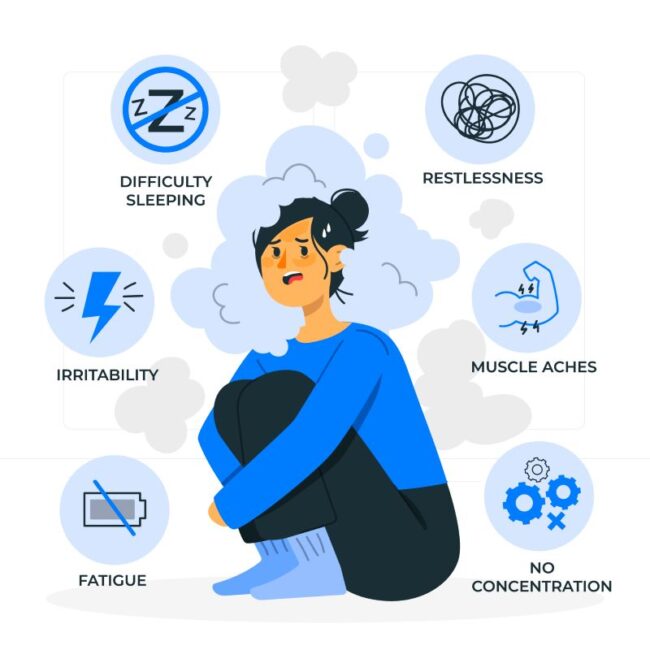
Woman with a cloud above her head, representing the mental chaos of ADHD. Therapy and ADHD coaching can help manage these overwhelming thoughts.

4. Boosting Self-Esteem & Confidence

If you’ve been told throughout your life that you’re ‘too disorganised’ or ‘not trying hard enough,’ it’s no surprise if your confidence has taken a hit. Many adults with ADHD struggle with self-doubt, feeling like they’re always one step behind.

Therapy can help rebuild your self-esteem by focusing on your strengths rather than your challenges. You’ll start recognising the achievements you’ve overlooked, no matter how small. By setting achievable goals and celebrating progress, therapy helps you see that you’re capable of success, just like anyone else.

Breaking free from negative patterns plays a key role in building confidence. If self-doubt and old thought patterns are holding you back, you might find this blog on Building Self-Confidence and Breaking Negative Patterns helpful. It explores shifting your mindset and developing a stronger sense of self-worth.

5. Strengthening Relationships

ADHD can sometimes impact relationships, whether it’s forgetting important dates, struggling with communication, or feeling misunderstood. Therapy can help you navigate these challenges by improving communication skills and providing strategies to build stronger, healthier connections with loved ones, friends, and colleagues.

Understanding how ADHD affects your interactions can help you explain your needs more effectively and develop strategies for better communication. Stronger relationships create a stable support system, which is invaluable when managing ADHD.

6. Setting and Achieving Goals

Goal-setting can be tricky when you have ADHD. Big goals can feel overwhelming, and smaller steps can be easy to overlook. Therapy helps you break goals into manageable actions, create realistic plans, and track progress without the pressure of perfection.

Whether you want to improve your work performance, stay on top of daily tasks, or focus on personal development, therapy provides the structure, accountability, and encouragement to keep you moving forward.

7. Medication & Therapy: A Holistic Approach

For some adults with ADHD, medication can be helpful, but it’s not the only approach. Therapy provides practical skills and emotional support, helping you develop strategies tailored to your needs, whether or not you choose to use medication.

By focusing on self-awareness, coping techniques, and structured support, therapy empowers you to manage ADHD in a way that works for you.

Finding Clarity & Confidence with ADHD Therapy

If you’re feeling overwhelmed or unsure where to start, therapy could be the first step toward clarity and calm. Alongside counselling, my ADHD Coaching Room offers practical tools and courses designed to help you build confidence, focus, and self-understanding.

Take a look at my ADHD courses to discover resources that can support you in managing ADHD in a way that fits your life, helping you move forward with greater balance, confidence, and self-compassion.

Schedule Your Free Discovery Call

Looking for support with anxiety, phobias, or life transitions? I offer counselling, coaching, and RTT to help you move forward with confidence. Book a free 20-minute discovery call via Zoom to explore the best approach for you, wherever you are in the UK.

SCHEDULE A Free DISCOVERY CALL
Call Now Button